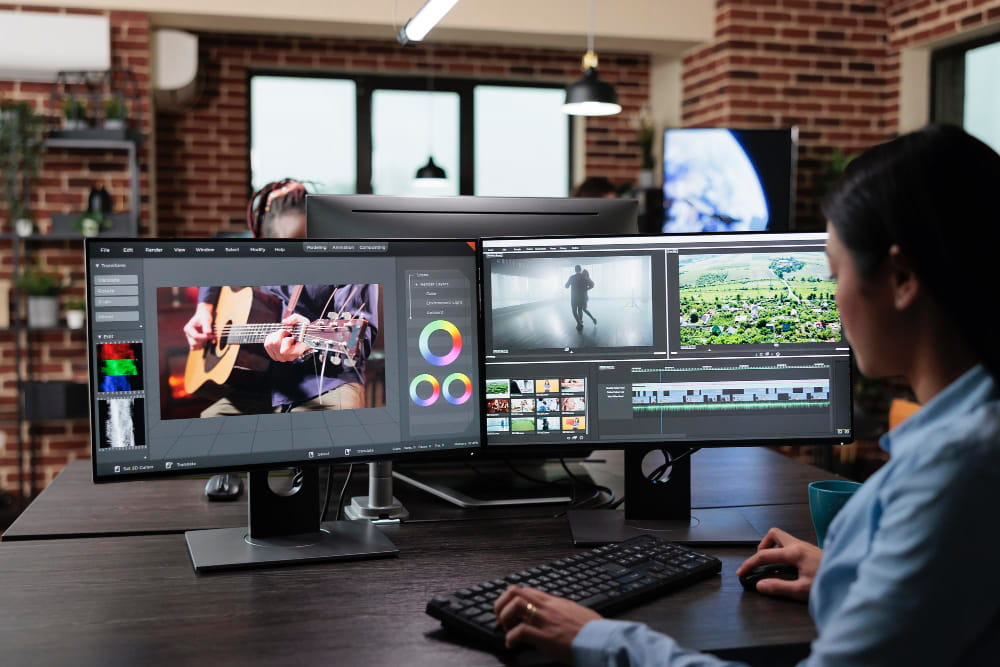

Producing a professional video takes more than a good script and a camera. Someone needs to develop the concept, organize filming, coordinate talent, manage equipment, and turn hours of footage into content that supports your marketing goals. For many businesses, managing all these responsibilities internally can become expensive and time-consuming, especially when production isn't a full-time priority.
Outsourcing video production lets companies work with external creative professionals who can handle specific production stages or the entire project, from concept to final video. However, choosing the right partner and organizing the workflow properly can make a significant difference in the results. Poorly defined expectations can lead to delayed shoots, unexpected expenses, additional revisions, and videos that don't quite match the original vision.
A successful outsourcing strategy starts with clear creative direction, realistic budgets, and defined responsibilities. This guide explains how to outsource video production in 2026, including available service models, production costs, vendor evaluation, contract requirements, and steps to maintain creative control throughout the process.
What Does It Mean to Outsource Video Production?
Outsourcing video production means hiring an external company or creative professional to handle part or all of the video production process. Depending on the project, this can include creative development, scriptwriting, storyboarding, filming, animation, editing, sound design, and final delivery.
For example, a SaaS company launching a new product might work with a production agency to develop a promotional video, while its internal marketing team manages campaign strategy and distribution. A retail brand may use a local crew to film product demonstrations and rely on remote professionals for ongoing post-production.
Video production typically involves three stages:
- Pre-production: Develop the concept, write scripts, plan shots, select locations, arrange equipment, and prepare the production schedule.
- Production: Capture footage, record audio, direct talent, and manage on-set activities.
- Post-production: Edit footage, create graphics, adjust colors, mix audio, add captions, and prepare final versions.
The outsourcing arrangement determines which stages your external partner manages and which your company keeps under its control. A full-service production agency may oversee all three stages. A dedicated remote creative professional may focus on script development, animation, editing, or production coordination.
If your company only needs help editing existing footage, South's guide to outsourced video editing services covers that narrower requirement.
Which Video Production Tasks Should You Outsource?
Different projects require different levels of outside support. The most effective approach is to identify what your internal team can already do and where external expertise would improve the final result.
Creative Development and Pre-Production
A video production partner can support concept development, scripting, storyboarding, and planning. For example, a B2B company producing a customer testimonial may need help transforming technical product benefits into a compelling narrative. External producers can also coordinate interview questions, filming schedules, location requirements, and creative references.
Filming and On-Location Production
Professional filming may require directors, camera operators, lighting specialists, sound engineers, production assistants, and specialized equipment. Hiring a production crew for a defined project is especially useful if your company doesn't have its own studio.
Location matters when you're filming on-site. A crew producing interviews at your New York office must have appropriate on-site availability, even if other creative tasks are handled remotely. For businesses filming across several locations, external production coordination can help maintain consistent technical standards.
Animation, Editing, and Post-Production
Some video formats can be produced entirely remotely. Animated explainers, product walkthroughs, motion graphics, and certain social media videos may rely primarily on digital assets rather than physical filming. Companies can work with remote video editors, motion designers, animators, and multimedia specialists to produce and refine these assets.
Separating physical production from remote post-production can work well, especially if your company produces videos regularly. South's Motion Designer role highlights specialized animation and visual design capabilities.
Which Video Production Outsourcing Model Is Best?
Your choice should depend on the content type, production frequency, available internal resources, and how much responsibility you want an external partner to take on.
Full-Service Production Agencies
A full-service agency takes responsibility for the agreed production process, typically coordinating creative planning, filming, and post-production. This works for projects that require multiple specialists, professional equipment, locations, talent, and centralized production management.
If you want to compare specific providers, South's best video production companies guide reviews companies with different specialties.
Local Crews With Remote Creative Support
Businesses can film locally and delegate editing, animation, and other digital production tasks to remote specialists. This arrangement works particularly well for corporate interviews, product demonstrations, customer testimonials, and recurring brand content. Your company retains flexibility for on-site production while gaining access to a broader pool of post-production talent.
Dedicated Remote Creative Professionals
When video becomes an ongoing business activity, hiring a dedicated creative professional may be more practical than starting a new agency engagement for each deliverable. A full-time editor or motion designer can work within your marketing team's existing processes, learn the brand, and contribute across different campaigns.
Dedicated remote professionals can support the production pipeline, but physical shoots still require appropriate local resources. South helps U.S. companies recruit this type of full-time creative talent from Latin America.
How to Outsource Video Production in 7 Steps
A clear outsourcing process makes it easier to manage creative expectations, production schedules, and commercial responsibilities.
Step 1: Establish the Video's Business Objective
Start with what the video needs to accomplish. Are you introducing a product, generating leads, improving conversion rates, training employees, or increasing brand awareness? For example, a product launch video might need to explain three key features and encourage viewers to request a demonstration. A clear outcome helps your creative partner decide on messaging, format, length, and visual style.
Step 2: Define the Scope and Deliverables
Identify the number of videos required, approximate duration, distribution channels, filming requirements, and expected versions. A single campaign may require a 90-second main video, several 15-second advertisements, and vertical versions for social media.
Specify these requirements before requesting proposals. Otherwise, additional formats and cutdowns may be treated as separate work.
Step 3: Select the Appropriate Outsourcing Model
Determine whether your project requires a full-service agency, a local filming team, a remote animation studio, or dedicated creative professionals. Consider who will coordinate production, approve decisions, and communicate with the external specialists.
A complex commercial may justify an experienced production agency. Recurring product videos may work well with a smaller, consistent team.
Step 4: Evaluate Portfolios and Production Experience
Review examples that resemble your intended content. For a software explainer, examine how clearly the provider communicates complicated information. For a commercial, pay attention to visual storytelling, cinematography, pacing, and production quality. Relevant experience with your video format matters more than an impressive portfolio featuring unrelated work.
Step 5: Approve the Creative Concept Before Filming
Request a treatment, script, storyboard, or shot list before production begins. Check whether the proposed concept supports your messaging, target audience, and intended distribution channels. Resolve major creative disagreements before scheduling the shoot.
Changes made during filming or post-production can be considerably more disruptive than revisions made during planning.
Step 6: Establish Review and Communication Procedures
Assign one internal project owner to coordinate feedback and approvals. Agree on review milestones, delivery formats, revision limits, and how decisions will be documented. Tools such as Frame.io can support timestamped comments and organized feedback. Consolidated feedback helps avoid contradictory instructions and unnecessary revision cycles.
Step 7: Review the Final Assets and Complete the Handover
Before approving final delivery, verify that the video meets the agreed technical, creative, and contractual requirements. Check the picture, audio, captions, graphics, licensed materials, and exports. Confirm which project files, footage, design assets, and supporting documentation your company will receive. The project should end with usable video assets and the rights necessary to publish them as intended.
What Should You Include in a Video Production Brief?
A production brief translates your marketing objectives into instructions the creative team can execute. The stronger your brief, the easier it becomes to compare proposals and evaluate the final work against your original requirements. Start with the target audience and the message you want viewers to remember.
Then provide the creative and operational details:
- Video objective: The business outcome the content should support.
- Target audience: Who will watch the video and what matters to them.
- Core message: The main idea, product benefit, or story.
- Video format: Live-action, animation, interview, product demo, or mixed media.
- Distribution channels: Website, YouTube, LinkedIn, Instagram, paid advertising, or internal communications.
- Deliverables: Video lengths, aspect ratios, resolution, captions, language versions, and cutdowns.
- Creative references: Examples of pacing, tone, visual style, and production quality.
- Budget and schedule: Approved spending range, filming dates, review milestones, and final deadline.
For example, a B2B software company could request a two-minute product explainer designed for its homepage, plus three 20-second versions for LinkedIn advertising. The brief should explain the product's value, provide interface assets, define the audience, and establish the final call to action. Include a specific reviewer and approval process, especially when legal, product, and marketing teams need to participate.
How Much Does It Cost to Outsource Video Production?
The cost of outsourcing video production varies widely by content format, filming requirements, creative complexity, and number of deliverables. A remote animated explainer, a corporate interview, and a multi-location commercial have very different production budgets.
The main cost drivers are:
- Creative development. Concept development, scripting, storyboarding, and production planning may be charged separately or included in a full-service package.
- Filming requirements. On-site production costs depend on crew size, equipment, locations, travel, talent, and the number of shooting days.
- Post-production complexity. Editing, animation, visual effects, color grading, sound, and design affect how much specialist time is required.
- Deliverable volume. Multiple aspect ratios, shorter ad variations, subtitles, and localized versions add work.
- Usage rights and licensing. Music, stock footage, voiceovers, performers, and other third-party material may carry additional fees or usage limitations.
- Revisions and turnaround. Additional review rounds and expedited delivery can increase costs.
How Should You Compare Production Quotes?
Request itemized proposals separating pre-production, filming, post-production, licensing, revisions, and final delivery. Check whether the quote includes taxes, travel, equipment, location expenses, talent fees, and source files. For example, a provider may offer a competitive price for the main video but charge separately for every social media variation.
Your comparison should reflect the full set of deliverables your marketing team needs.
What About Dedicated Remote Talent?
For companies producing videos continuously, a dedicated remote creative professional offers a different cost structure. South currently publishes an average $2,900/month all-in staffing benchmark for a Video Editor from Latin America. This is a staffing reference, not a quotation for a complete video production project. It doesn't automatically include on-location filming, production crews, studio rentals, or other agency services.
Evaluate the total cost of producing and maintaining your video content, rather than comparing project fees with an individual editor's monthly rate as if they represented identical services. Review South's pricing model to understand how its full-time staffing service is structured.
How Do You Choose a Reliable Video Production Partner?
A strong production partner should understand your business goals and show they can deliver the specific format you need. Start by reviewing its portfolio, then ask about the process behind the finished work.
Examine Relevant Production Experience
Ask the provider to explain who developed the concept, directed the shoot, managed post-production, and handled client revisions. A beautiful final video doesn't necessarily show whether the company managed the full process or handled only one stage. Confirm the responsibilities and specialists included in your proposed engagement.
Review the Production Plan
The provider should explain how it handles scheduling, equipment, filming locations, technical preparation, and potential delays. For live-action projects, ask what happens if a location becomes unavailable, a key participant cancels, or additional filming is necessary. For animation projects, examine the storyboard process and how creative revisions are approved.
Evaluate Communication and Accountability
Determine who will serve as the main contact and who has authority to make creative and budget decisions. Ask how feedback is collected, how often progress will be reported, and how disputes over scope are resolved. A reliable production process should make responsibilities visible before the first day of work.
For high-value projects, consider a paid creative discovery phase to evaluate the provider's approach before committing to the entire production.
What Should Your Video Production Contract Include?
Video production involves multiple creative assets and contributors, so the contract should explain what your company receives and how those materials may be used. Pay particular attention to:
- Scope and milestones. Define the agreed videos, production stages, schedule, review deadlines, and criteria for approving each deliverable.
- Ownership and intellectual property. Clarify rights to the final videos, scripts, graphics, footage, and project files. Include appropriate written transfers or licenses where necessary.
- Talent and location releases. Confirm that required permissions have been obtained for people, property, locations, and other recognizable elements appearing in the video.
- Music and third-party licensing. Establish who is responsible for securing music, stock footage, fonts, and other assets, including whether rights cover paid advertising, commercial use, geographic markets, and the intended duration.
- Revision terms. Define the number of included revisions and the difference between correcting work that doesn't meet the brief and requesting a new creative direction.
- Final handover. Identify the required exports, source files, original footage, caption files, audio stems, and storage or archival arrangements.
For U.S. projects, commissioning a creative work doesn't automatically guarantee that every copyright interest transfers to the client. Appropriate agreements and rights documentation matter, particularly when freelancers or third parties contribute. Have legal counsel review agreements involving complex licensing or high-value commercial productions.
How Do You Manage Remote Video Production and Final Delivery?
Video production often involves people working in different locations, even when filming itself takes place on-site. A company might have its marketing manager in the United States, a local camera crew, and an editor or motion designer working from Latin America. The most important operational decision is establishing a single workflow for transferring assets, collecting feedback, approving work, and managing revisions.
Organize Production Files From the Beginning
Agree on consistent file names, folder structures, media formats, and storage permissions. Make sure editors receive complete footage, audio files, graphics, scripts, and any necessary reference material. For larger productions, establish a media backup process and verify that files are intact before releasing footage from the set.
Create Clear Approval Checkpoints
Use milestones to avoid discovering major problems at the final review.
Assign one person to consolidate feedback from stakeholders before each approval. This reduces conflicting comments and keeps creative decisions consistent.
Review Production Performance
Track practical indicators such as milestone delivery, revision cycles, budget variance, technical defects, and the percentage of assets accepted without rework. After publication, measure results against the video's purpose. For marketing campaigns, this may include qualified conversions, engagement, view-through performance, or creative testing results.
A video can meet production standards without achieving its commercial objective, so evaluate both delivery quality and business outcomes.

Make Video Production Easier With South
A major brand campaign may require a production studio, directors, and an experienced filming crew. But the work often continues after that campaign ends. Your marketing team still needs product demonstrations, social media variations, customer stories, webinar highlights, and new video assets for upcoming launches. A dedicated creative professional can make a meaningful difference in this recurring production workload.
South helps U.S. companies recruit full-time Video Editors and Motion Designers from Latin America who can work within an existing marketing or creative team. A dedicated editor can develop familiarity with your brand, manage recurring post-production assignments, and support creative projects without requiring a separate vendor engagement for every video.
South supports sourcing, screening, payroll administration, and ongoing staffing assistance through its consolidated monthly pricing model. If your business already has a video calendar, identify the work that repeats every month: editing interviews, creating social cutdowns, developing animations, or preparing product videos.
Those recurring responsibilities can form the basis of a dedicated role. Schedule a call with South today to explore creative professionals who can support your ongoing video production needs.
Frequently Asked Questions (FAQs)
Can you outsource the entire video production process?
Yes. Full-service production companies can manage planning, scripting, filming, editing, and final delivery. However, the specific scope depends on the agreement, and certain services, such as specialized animation, travel, or talent licensing, may require additional arrangements.
Is outsourcing video production cheaper than hiring an internal team?
It can be, especially if your business only needs occasional filming or specialized equipment. For recurring content, a dedicated creative professional may provide more predictable capacity. The right comparison depends on your actual production volume and requirements.
Can video production be outsourced overseas?
Yes. Many digital production activities, including scripting, editing, animation, motion graphics, and post-production, can be completed remotely. Physical filming still requires access to the appropriate location, participants, and equipment.
Should businesses outsource video production or hire a dedicated creative professional?
Project-based production can suit occasional commercials or high-production-value campaigns. Dedicated professionals may suit companies that produce frequent marketing videos, product content, social media assets, and ongoing post-production work.